
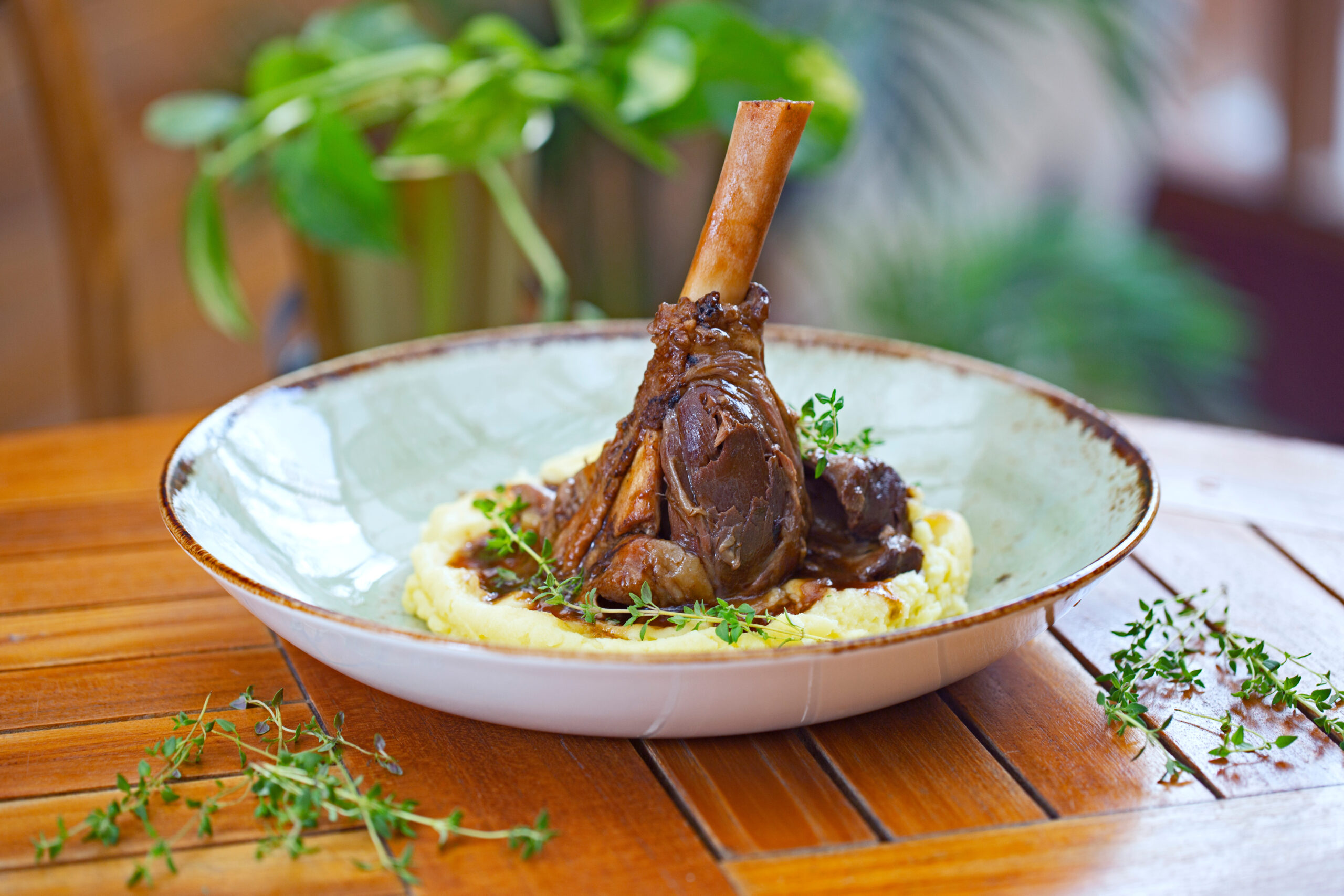
I don’t know about you, but in January I’m done with Winter and I start yearning for the new season and produce like asparagus or lamb. While I love these and they are amazing, we shouldn’t forget about amazing produce available right now. Today I am talking about lamb’s older brother mutton. Maybe it’s because I enjoy cooking classic dishes or that I have big mutton chop sideburns, but I love cooking and eating it when possible. However, this unique meat is almost impossible to find. In the era of sustainability, could there be more demand for it? I’ve never seen it in the supermarket, and you rarely come across it on menus. We love our lamb but mutton, which used to be far more common on British dinner tables, has really fallen out of favour.
There doesn’t seem to be any good reason for this, other than changing trends in the way we produce and eat our food. Looking into history, according to the great Mrs Beeton, writing 150 years ago, “Mutton is undoubtedly the meat most generally used in families and by connoisseurs … it stands first in flavour”. Today people seem to think that mutton is just tough old lamb and a lesser option. This assumption in my opinion doesn’t do it justice. After all, we don’t think of beef as just tough old veal.
So, what is mutton? Well, it comes from a sheep that is more than two years old (lamb tends to be anything up to a year – after that it’s technically called “hogget”), and because of its age and the fact that it tends to have spent longer outdoors it has more inter-muscle fat, known in the trade as “marbling”. Although this makes the meat less sweet and tender than lamb, it also gives it a deeper flavour. It does take more (slower) cooking, but to my mind, the rewards are there.
Thanks to its stronger taste, dishes such as stews, hotpots, pies, tagines or curries come alive when you substitute lamb with mutton. It goes perfectly with sharp, spicy or other robust flavours, which is perhaps one reason why it is popular in Middle Eastern and Asian cookery. One of the easiest ways to eat it is in a simple Shepherd’s pie, throwing in a few capers at the end to give it another dimension.
If you can find it, now’s a good time to try how versatile and flavoursome it can be. We still have months to wait for the British new season’s lamb to grow and be ready. The issue with “if you can find it” is the problem. While some TV chefs and food writers have started challenging negative perceptions of mutton, the lack of availability is the biggest hurdle, although restaurants like St Johns and Otto’s are leading the way in championing different meats. To get this back on the menu more readily we really to get the conversation growing about the poor old sheep and putting mutton chops, roasting joints, pies and stews, back in fashion. I am sure the appetite would be there. Mrs Beeton would be proud!